Welcome to student life
Welcome to William Marsden Hall (Bill Mars), a New Zealand university residence teeming with energy, noise, and constant movement.
It's a vibrant shared space where doors are always open, people drift in and out, and life unfolds in kitchens, corridors, and common rooms as much as it does in private.
This is a transitional space, where students arrive as strangers and slowly become an essential part of each other’s lives. It’s messy, warm, sometimes overwhelming, and always changing, fostering a sense of community where everyone is growing up in public.
Discover the real, human, and communal atmosphere that makes The Halls so unique.

William Marsden Hall
Welcome to William Marsden Hall, a modern, community-focused student residence designed for life beyond the lecture theatre.
Located just twenty minutes from the University of Auckland campus, with a direct bus route right to your doorstep, Bill Mars makes getting to class effortless while giving you space to breathe, study, and connect.
The hall is made up of four distinct blocks, each with its own character and shared spaces, creating smaller communities within a larger, vibrant hall culture.
Whether you’re heading to a study nook, catching up with friends in the common room, or grabbing a quick meal before class, everything you need sits within a comfortable, student-first environment.
At William Marsden Hall, it’s not just where you stay. It’s where your university story starts.

The Communal Kitchen
The social engine of the hall.
Every floor has a communal kitchen. This is the place where everyone eventually ends up, whether they meant to or not. It’s where meals turn into conversations, and conversations turn into friendships. There’s always something cooking, something burning, or something missing from the fridge.
It’s loud, warm, and unpredictable. People drift in and out at all hours — for late-night noodles, early morning coffee, or just to avoid being alone in their room.
It’s also where tensions show first. Shared space means shared responsibility, and not everyone plays by the same rules.
If you want to know who’s getting along — or who isn’t — you watch the kitchen.

The Common / Study Room
The battleground between focus and distraction.
By day, it’s a study zone. Laptops open, headphones in, whiteboards covered in deadlines and half-finished plans. It’s where people try to be the best version of themselves.
By night, it shifts. Music leaks in, conversations get louder, and the room turns into a social space without anyone officially declaring it.
It’s where group dynamics are most visible — who studies together, who avoids each other, who shows up, and who disappears.
This is where pressure, ambition, and friendship all share the same table.

The Laundry
The quiet space where small things say a lot.
The laundry room is rarely anyone’s destination, but it’s where unexpected conversations happen. People run into each other when they’re tired, distracted, or thinking about something else.
Clothes spin, time slows down, and honesty tends to slip through more easily here than anywhere else.
It’s also where small acts of care show up — folding someone else’s washing, leaving a machine free, or not.
The laundry reveals who people are when no one’s really watching.

The Meal Room
Bill Mars is fortunate enough to be a catered hall. As well as each residential floor having its own communal kitchen, the entire campus has The Meal Room; a place where the hall slows down just enough for everyone to collide.
Trays, chatter, late arrivals, inside jokes, awkward silences — it all happens here. It’s part routine, part social arena, and part pressure cooker, where friendships are built, tensions surface, and the day’s drama gets replayed over whatever’s on the menu.
At Bill Mars Hall, if something’s going to shift in the group, it usually starts with the food.
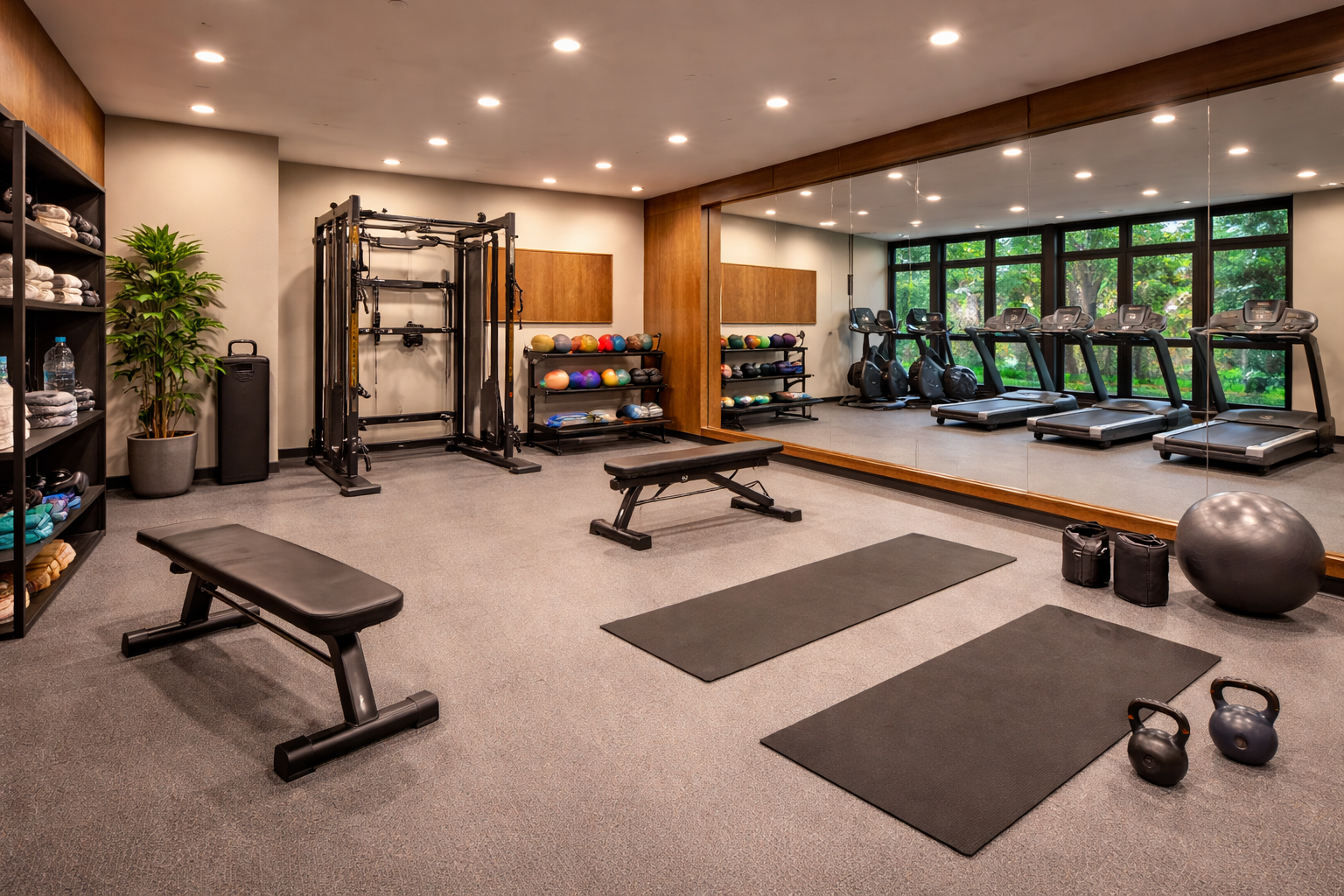
The Gym
The gym is where some students push themselves physically, and others try to regain a sense of control when everything else feels uncertain.
It’s a space of routine and discipline — reps, rehab, and quiet effort. Conversations here are shorter, more honest, and often more vulnerable than they appear.
For some, it’s about strength. For others, it’s about healing.
It’s one of the few places in the hall where progress is measurable — even when life outside it isn’t.

The Library
Often visited by the students, conversations happen here more than study. This is also where Maia likes to occasionally tutor her fellow students.
The library is also where another one of our characters works. She spends many hours judging books by their covers.
If you need somewhere quiet to study, this might not be the best place for you.

Shaped by shared walls
In The Halls, the residence isn’t just a setting; it's an active force that shapes the characters. The constant proximity forges connections rapidly, transforming strangers into flatmates and deepening friendships at an accelerated pace.
This unique emotional ecosystem witnesses first failures, new relationships, identity shifts, and personal breakthroughs.
Limited privacy and clashing personalities create friction, but this pressure also forces communication, accountability, and incredible growth.
Ultimately, The Halls creates a chosen family, a vital support system that becomes central to who these students are by the end of their journey.
The building itself is the engine driving their transformation.